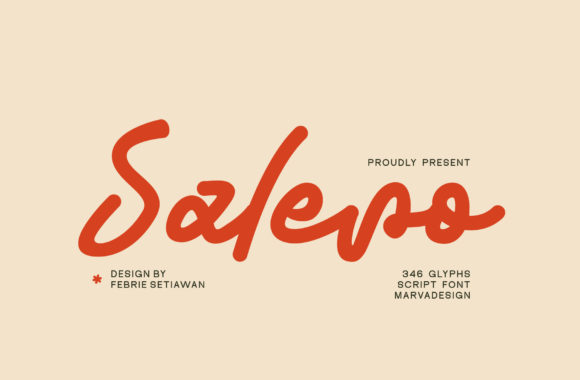
Salero Font for Campaign Creatives
I was finalizing a seasonal sale graphic when I stumbled upon Salero. It wasn’t just any font—it had that handcrafted feel, like someone had taken the time to write each letter with care. As I tested it in my design mockup, something clicked. The fluidity of the strokes, the fine details, and the overall personality made it stand out. It wasn’t just readable; it felt personal.
What Is Salero?
Salero is a script and handwritten font that brings a unique character to every glyph. Its design blends the natural flow of handwriting with precise typographic details, making it both expressive and professional. It has a warm, approachable vibe, perfect for campaigns that aim to connect emotionally with the audience.
This typeface isn’t just about aesthetics. It communicates a mood—friendly, creative, and slightly artistic. Whether you're promoting a product, launching a course, or creating content for a brand campaign, Salero can help set the tone from the first glance.
Using Salero in Real Campaigns
I tested Salero across several campaign assets: a YouTube thumbnail, an Instagram post, and a digital ad layout. In each case, it performed well, especially when used for headlines or callouts. On a YouTube thumbnail, it helped draw attention without overwhelming the visual space. For an Instagram post, it added a touch of elegance to a promotional message about a limited-time offer.
On mobile screens, where readability is crucial, Salero held up surprisingly well. Its clean lines and consistent stroke weights made it legible even at smaller sizes. When layered over dark backgrounds or used in fast-scrolling feeds, it didn’t lose its clarity. That’s a big plus for social media managers who need their content to pop instantly.
For digital ads, I paired it with a clean sans serif font to balance the design. This combination worked great for a course launch banner, where Salero handled the headline and the sans serif took care of the supporting text. It created a nice contrast without clashing.
Creative Use Cases for Salero
Salero works best for short headlines, decorative titles, and logo-style text. I used it in a webinar banner to create a sense of urgency around a live event. It also looked great in a Pinterest pin for a product teaser, adding a personal touch that stood out in a sea of generic visuals.
In an email promotion, I applied it to the subject line and call-to-action button. It gave the message a friendly, inviting feel that encouraged opens and clicks. For branded templates, it helped maintain consistency across multiple assets, reinforcing brand identity through typography.
However, there are limits. Salero isn’t ideal for long blocks of text or dense information. It shines as display text rather than body copy. If you’re designing a landing page, use it sparingly—maybe for the hero headline or a key selling point.
Readability and Practical Tips
When using Salero, consider the context. It performs best on light or neutral backgrounds. Avoid pairing it with overly busy designs or patterns that might distract from the text. Also, be mindful of spacing and leading. Too much compression can make the letters look cramped, while too much space can break the flow.
For multilingual support, check the font files before using it in global campaigns. Most premium fonts include extensive language coverage, but it's always good to confirm. Commercial licensing is another important factor—make sure you have the right permissions if you plan to use Salero in ads, merchandise, or client projects.
Font pairing is key. A strong contrast between Salero and a complementary font can elevate your design. Try it with a modern sans serif for a fresh look, or a classic serif for a more refined aesthetic. Experiment with different weights and styles to find the perfect match for your campaign needs.
Whether you're working on a seasonal sale, a product launch, or a content series, Salero adds a layer of creativity and personality to your visuals. It’s not just a font—it’s a tool that helps your message resonate with your audience in a meaningful way.